
Protect everything you do and own online
Scammers buy your name, address and phone, then call, text and email. We cut off both ends.





Scams stopped being rare
The average American gets a scam text or call almost every day. Most are easy to ignore. The one that isn’t usually arrives on a bad day, in the name of your bank, your carrier or your grandchild.
Nothing here is about being careless. It’s about how much of your information is already public, and how cheap it is to buy.
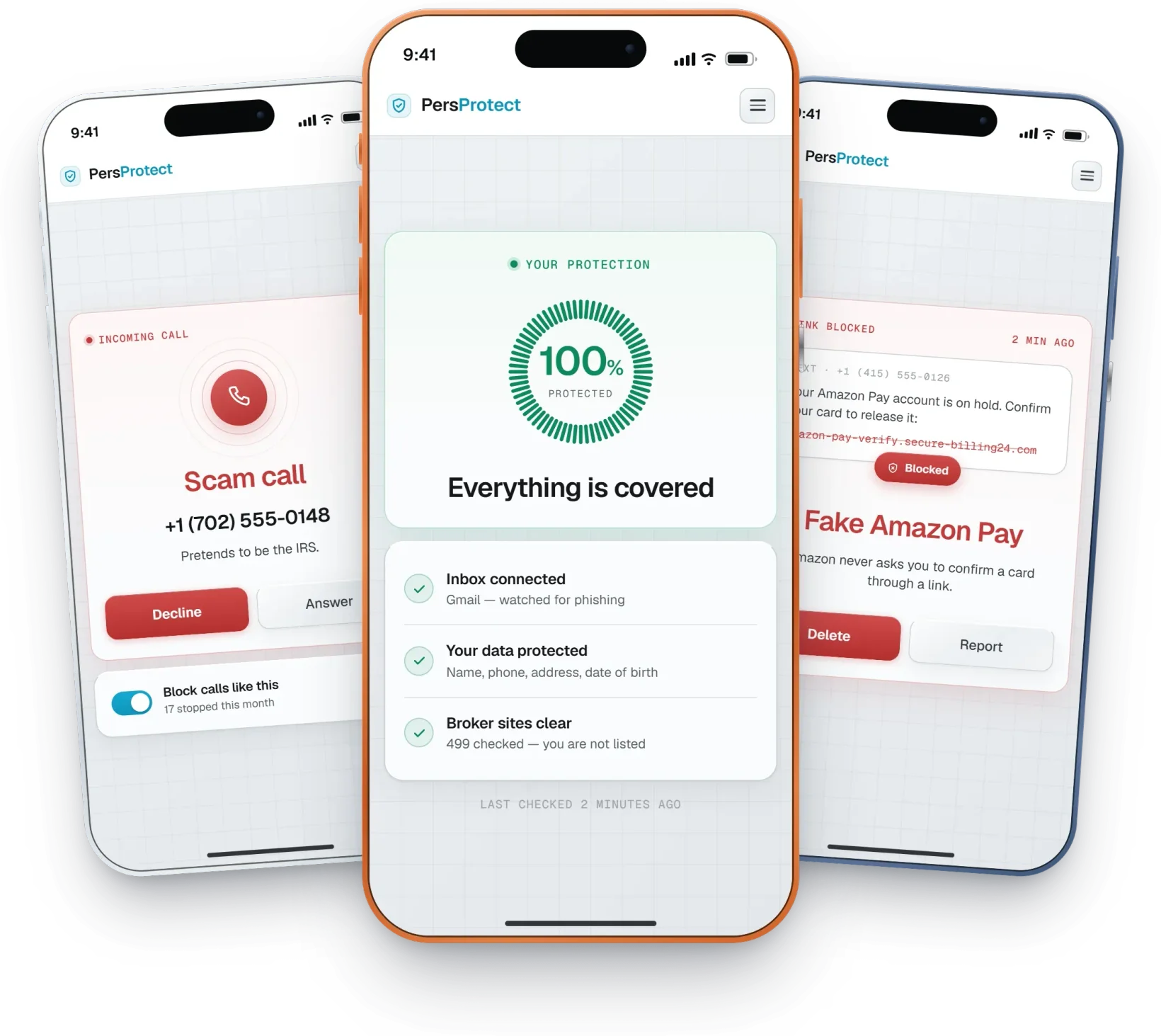
One shield. Every attack surface.
Scammers use whatever reaches you. So we cover all of it.
How we protect you
Seven layers, one app.
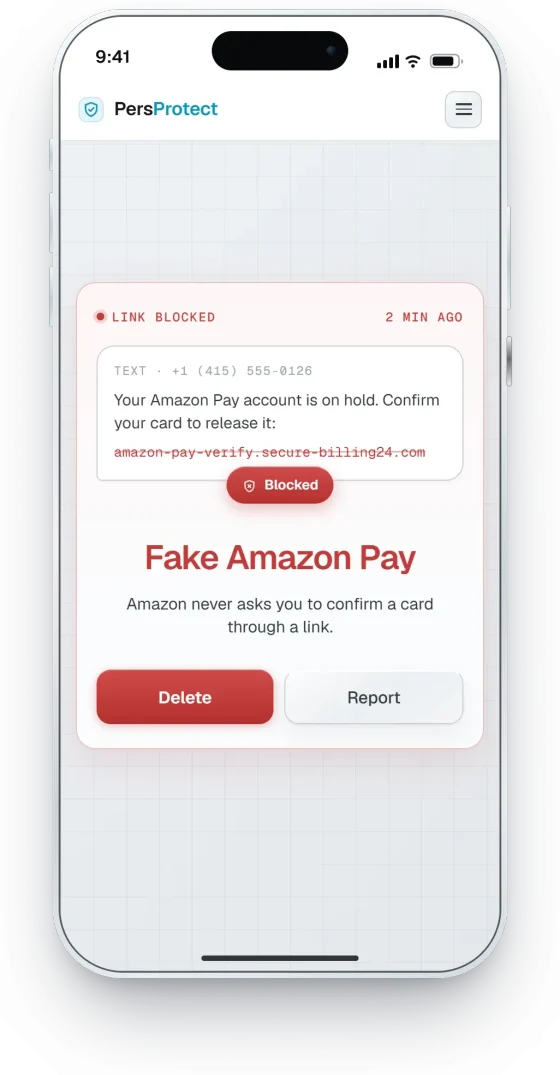
Safe browsing
Links you click. Fake stores, fake logins, fake delivery pages. We check the destination and stop the bad ones before the page loads.
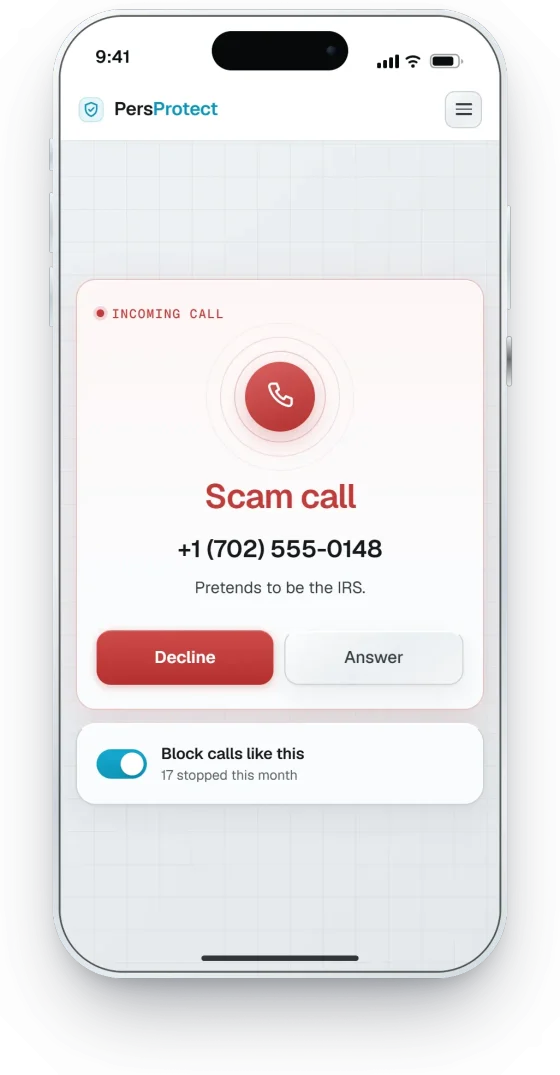
Calls
Who’s calling. Spoofed numbers and fake bank security lines get named before you answer — and you can block the whole pattern in one tap.
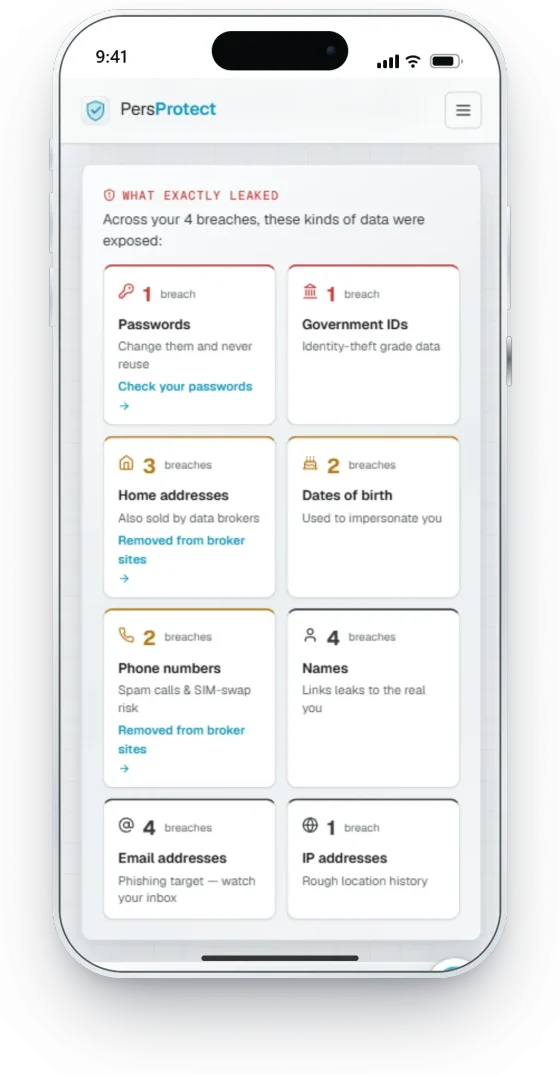
Leak alerts
What already got out. We check your email against known breaches and tell you exactly which pieces of you are in them — passwords, addresses, dates of birth.
What lands in your inbox. Phishing, fake brands, invoice scams — flagged the moment they arrive.
Text messages
What comes by SMS. “Package on hold.” “DMV fine.” “Hi mom, new number.” Caught, not delivered.
Scam radar
What’s going around right now. We watch what scammers are running this week and warn you first.
Data removal
Where it all starts. We erase your name, address, phone and relatives from 499 sites that sell them — and keep them erased.
Check if your email has leaked
We search known breaches and the sites that sell your details, and show you what a scammer would find. It takes about a minute and costs nothing.
The click that costs money
Most losses start with one tap. A tracking link, a payment page, a login screen — copied well enough to pass a glance.
We read the destination before your browser does: how old the domain is, who registered it, what it’s pretending to be, whether it’s already reported. If it’s bad, the page never opens.
You get one screen instead: what the site was, and why we stopped it.
Everything that reaches you
Email, text and phone are one stream to a scammer. They try all three until something works.
So we treat them as one stream too. Every message and every call is checked against what we’re seeing across the network right now — the same fake carrier, the same “bank security line”, the same shortened link.
Safe things arrive normally. The rest is labeled or never delivered.
We shut off the supply
Scammers don’t guess your number. They buy it. Whole sites exist to publish your name, address, age, relatives and phone — and sell the list to anyone.
We file removals across 499 of those sites, confirm each one, and re-check them — because records come back.
Removing your data doesn’t just protect your privacy. It’s what makes the calls, texts and emails stop coming.
How it works
Check
Enter your email. We show where your data is exposed and what scammers can already see.
60 secondsWe clean and shield
Removals go out to the sites that sell your data, and protection turns on for your links, mail, texts and calls.
first removals in daysWe keep watching
Records come back and new leaks happen. We re-check, re-file and tell you when something changes.
every day, automaticallyYour protection, in one place
People who stopped the calls
“The calls stopped in about three weeks. I used to get six a day about my car warranty.”
“My mother almost paid a fake toll notice. Now those texts don’t reach her phone at all.”
“I found my home address on eleven sites. The report showed each removal as it went through.”
What we do and don’t touch: we check senders, numbers and destinations — we never read your message content.
Questions people ask
Start with a free exposure check
Takes 60 seconds. No card. You’ll see exactly what’s out there before you decide anything.